
Grassy weeds in lawns
Author: Stefan Palm Date Posted: 4 March 2026
During summer, you may notice grassy type weeds appearing in your lawn. While they are still a grass, they often grow faster, look a different colour and are much taller than your lawn.
In Summary
Grassy weeds are one of the most frustrating problems homeowners face during the warmer months. Unlike broadleaf weeds, these weeds are grasses themselves, which makes selective control difficult.
The most common grassy weeds in South Australian lawns are paspalum, crabgrass and barley grass. They grow quickly, produce large amounts of seed and can quickly take over a lawn if left unchecked.
The best strategy is prevention. A healthy, dense lawn will naturally crowd out many weeds. Where weeds do appear, early removal and the strategic use of pre-emergent herbicides such as Spartan can be very effective in preventing future outbreaks.
Why Grassy Weeds Appear in Lawns
During the warmer parts of the year you may notice grassy-type weeds appearing in your lawn. While they are still grasses, they often grow faster, look a different colour and are much taller than the surrounding lawn.
You will usually notice lots of seed heads appearing above the lawn, and you may find it frustrating trying to get rid of them. These weeds thrive in warm conditions and multiply quickly thanks to their prolific seeding nature. If left unchecked they can quickly dominate a lawn.
The challenge is that it’s not easy to selectively control a grass weed in a grass lawn. There are two main reasons:
- They are difficult to spot when young
- They continually germinate throughout the season
Even if you pull some out, new seedlings can continue to appear from the soil seed bank.
Identifying the Weed
There are many grass weeds that can invade a lawn. Some can be selectively controlled with herbicides, while others must be physically removed. Below are the three most common grassy weeds we see.
Paspalum (Paspalum dilatatum)
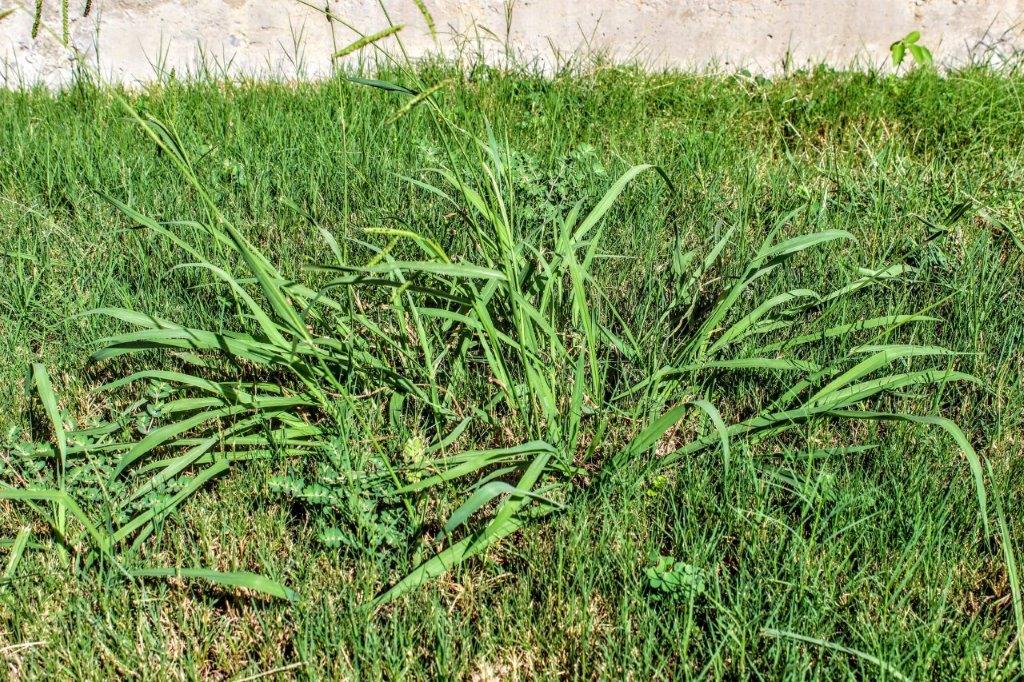
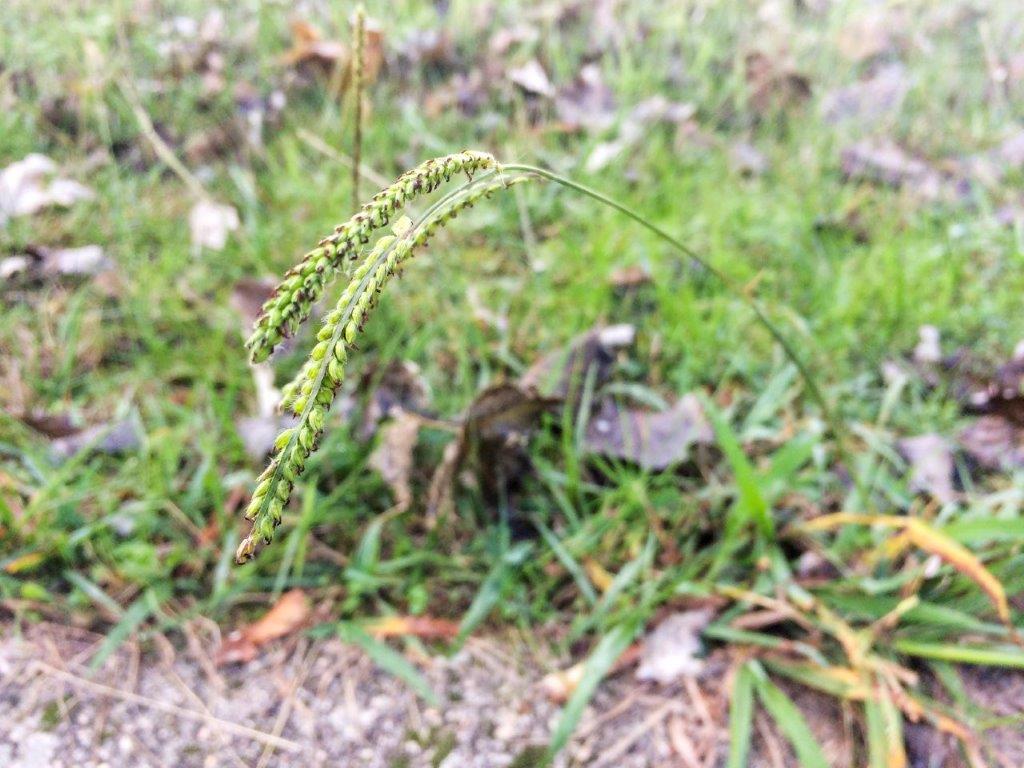
Paspalum has flat, bright green leaves that grow to around 20 cm long. Left unmown, it can grow up to one metre high, but it also survives well when regularly mown, which is why it can persist in lawns.
The easiest way to identify paspalum is by its distinct seed heads.
These seed heads:
- Are thin and about 12 cm long
- Are packed with seeds
- Have noticeable black anthers on the outside of the seed head
These black specks are usually the giveaway sign.
Crabgrass (Digitaria sanguinalis)
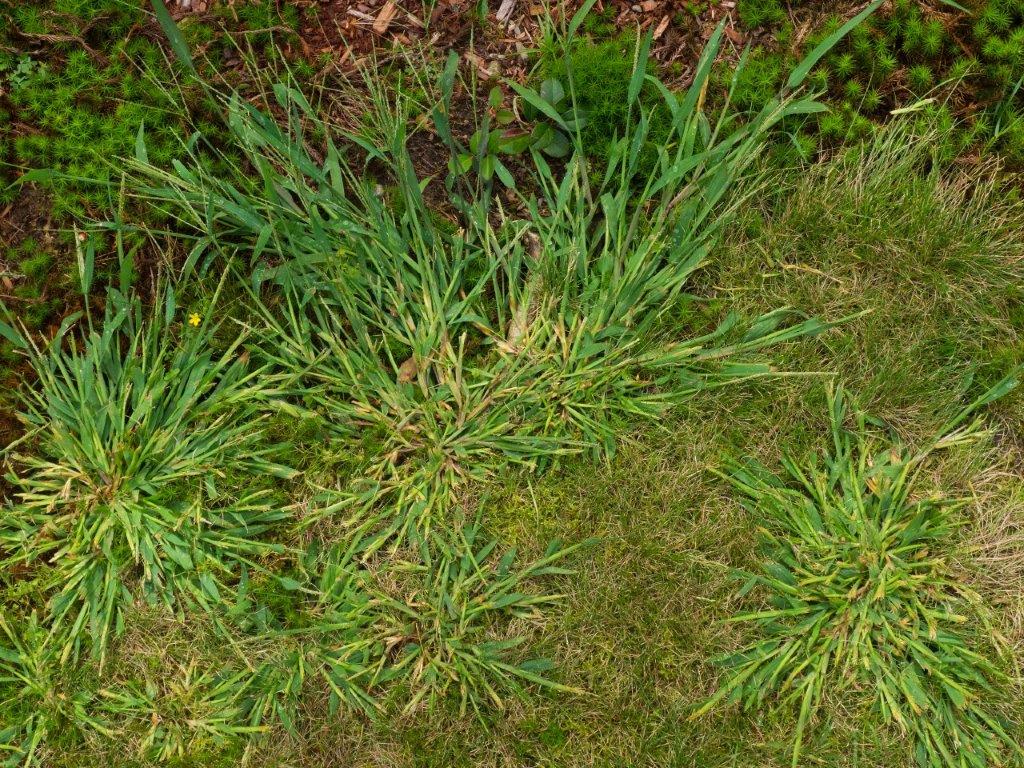
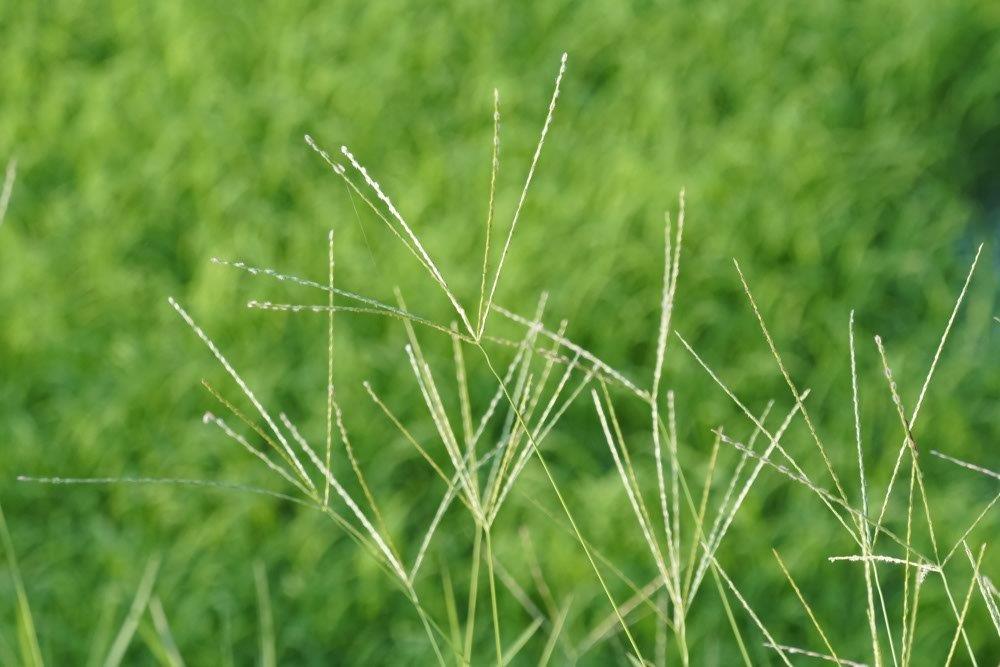
Crabgrass loves summer and thrives in hot, dry conditions. It grows low to the ground and spreads outward, often forming flat clumps across the lawn.
Characteristics include:
- Wide, flat leaves
- Bright green colour
- Stems that may appear dark green or even purple
The easiest way to identify crabgrass is also by its seed heads, which appear like multiple fingers of seed radiating from a single stem.
Barley Grass (and Similar Weeds)
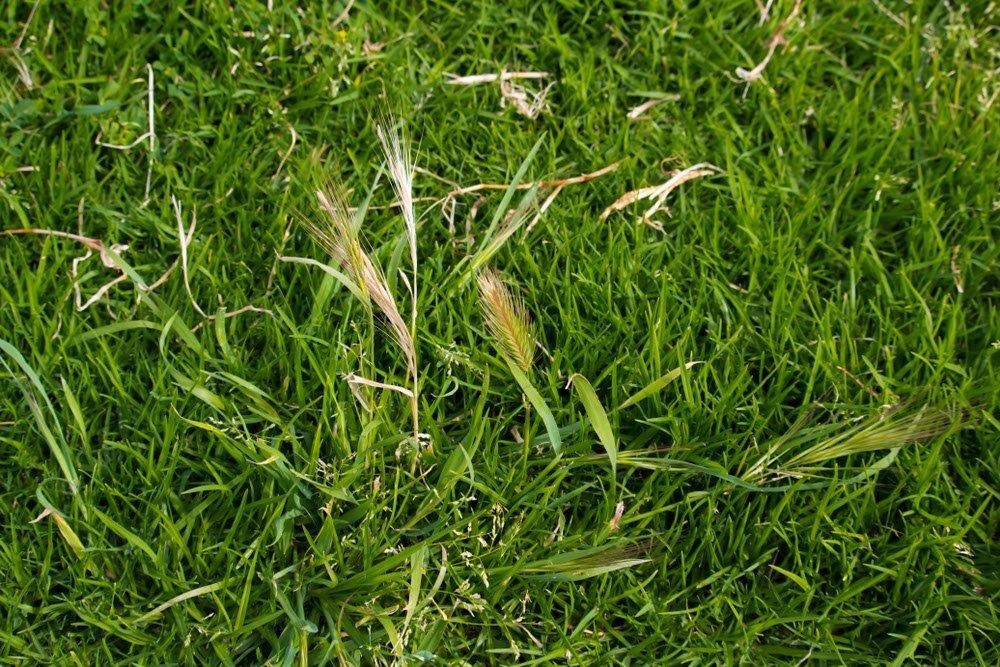
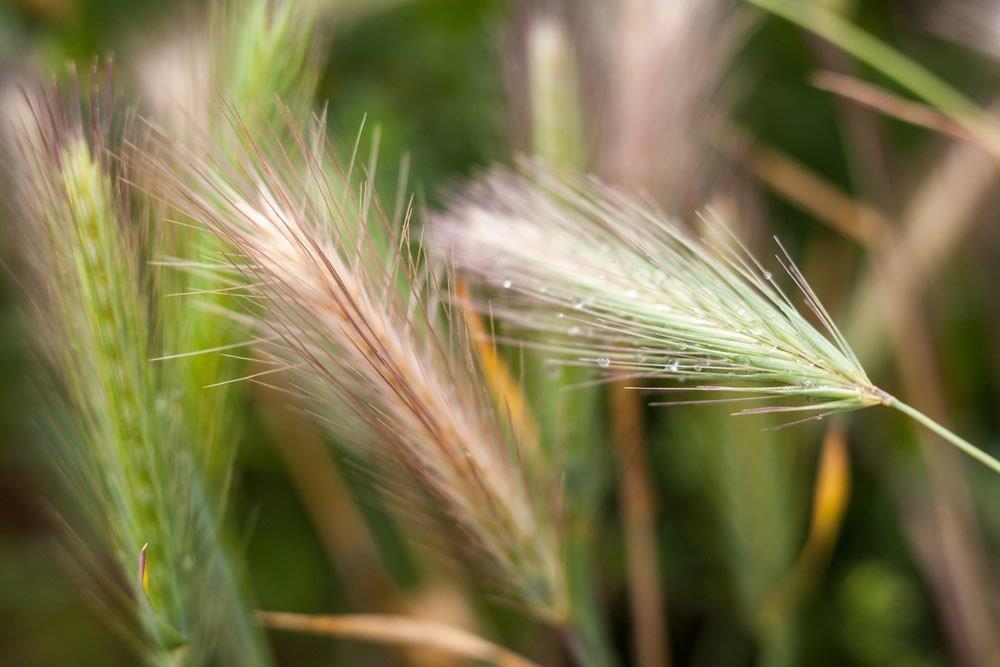
The term barley grass is often used loosely and may also include weeds like:
- Wild oats
- Field rye
- Other coarse cereal-type grasses
If you see these in your lawn, pull them out immediately. There are no effective selective herbicides available for domestic lawn use, and due to their heavy seeding nature they can quickly dominate if left to grow.
Prevention Measures
The best (and chemical-free) strategy for preventing grassy weeds is to maintain a healthy lawn. A dense lawn acts as a natural barrier against weed invasion. When lawns become thin or stressed, it creates openings for weeds to establish.
Common situations that allow weeds to invade include:
- Bare patches in the lawn
- Drought stress
- Poor soil nutrition
- Compacted or poorly maintained turf
A good fertiliser program will strengthen your lawn and make it harder for weeds to establish. If you notice a few weeds appear, remove them before they seed. Early action can prevent a much larger problem later.
Post-Emergent Control (After Weeds Appear)
Unfortunately, post-emergent chemical control options for grassy weeds are limited.One product available is commonly called Paspalum Killer, which contains the active ingredient DSMA.
It can control weeds such as:
- Paspalum
- Crabgrass
However, there is a major limitation. DSMA cannot be used on Kikuyu or Buffalo lawns, which rules it out for many households. Adding to the challenge, supplies of this product have been inconsistent in recent years. For many lawns, manual removal is still the most practical solution.
Pre-Emergent Control (The Most Effective Strategy)
While controlling existing grassy weeds can be difficult, preventing them from germinating is far more effective. This is where pre-emergent herbicides come in. Products such as Spartan work by preventing weed seeds from germinating. This is particularly useful for grassy weeds because they rely heavily on seed to spread.
Spartan can be safely used on mature:
- Couch
- Kikuyu
- Buffalo
When applied every three months, it provides continuous protection against new weed germination. This approach changes the problem entirely. Instead of constantly fighting new weeds, you:
- Prevent new weeds from growing
- Remove existing weeds as they appear
- Allow annual weeds to naturally disappear over autumn
Over time this strategy reduces the weed seed bank in the soil, meaning fewer weeds appear in the future.
Why Pre-Emergent Programs Reduce Chemical Use
It may seem counterintuitive, but a pre-emergent program can actually reduce chemical use over the long term.
By stopping weeds from germinating:
- Fewer weeds establish
- Less spraying is required later
- Hand removal becomes manageable
After a year of consistent pre-emergent treatment, many lawns experience dramatically reduced weed pressure.
Frequently Asked Questions
Why do grassy weeds suddenly appear in summer?
Most grassy weeds are summer annuals. Their seeds sit dormant in the soil until warm temperatures arrive, which triggers germination.
Can I selectively spray grassy weeds in my lawn?
Options are limited. Some products containing DSMA can control paspalum and crabgrass, but they cannot be used on buffalo or kikuyu lawns.
What is the best way to prevent grassy weeds?
The most effective strategy is a combination of lawn health and pre-emergent herbicides.
A dense, healthy lawn plus regular pre-emergent treatments can dramatically reduce weed outbreaks.
Will these weeds die off in winter?
Many grassy weeds are annuals, which means they naturally die off as temperatures cool in autumn.
However, if they have already produced seed, the problem may return the following year.
How often should I apply pre-emergent herbicide?
For continuous protection, apply pre-emergent herbicides every three months during the growing season.
Comments (2)
Scarifying kikuyu lawn
By: Erin Nourse on 22 March 2026Hello & thank you for this newsletter. When can I scarify a kikuyu lawn? Planted in 2009 it was used as a rental garden; hence no maintenance on it til 3 years ago. I have stopped using the lawn mower ‘shredder’ to help reduce the thatch build up & spongyness of the lawn. Please advise. Regards Erin
Paul Munns Instant Lawn Response
Hi Erin. The best time to scarify Kikuyu is October through to March each year. The warmer it is, the faster the lawn grows back.
John Lamb
By: Margaret Sparks on 9 March 2026Hi John, wishing you all the best for your future plans. Kind regards, Margaret and Malcolm Sparks.



